 Merken
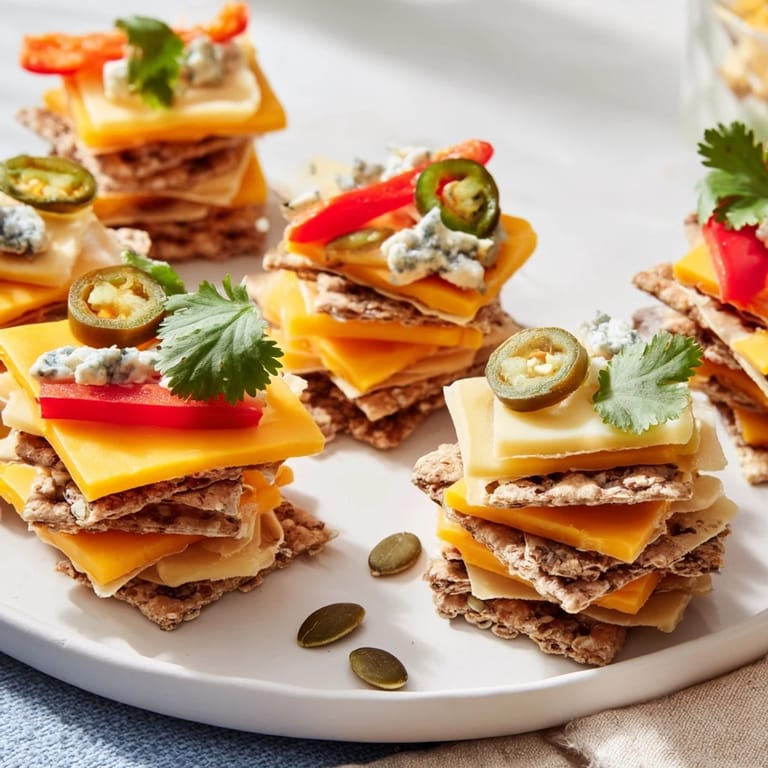
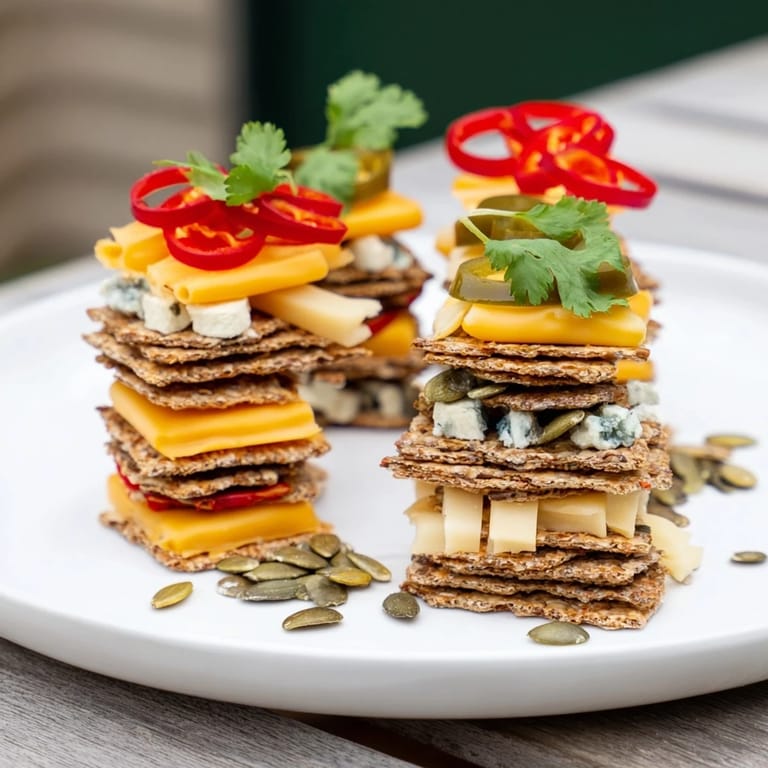
 My neighbor came back from Arizona raving about the landscape—those impossible, gravity-defying mesas rising from the desert floor. I was halfway through my second glass of wine when she mentioned wishing she could bottle that view into food. That night, staring at my cheese board scattered with crackers, it clicked: what if I stacked them like those plateaus, layering in cheeses and colors until something sculptural emerged? The Southwest Mesa was born more from architectural impulse than culinary planning, but something magical happened when everyone started deconstructing these little edible monuments with their hands.
I made these for a dinner party on a scorching July evening when my kitchen felt like an oven and I couldn't bear to cook anything that required heat. My friend Marcus grabbed one of the tallest stacks and held it up like a trophy, cheesing the whole group. Within five minutes, the platter looked like a disaster zone, but everyone was laughing and talking with their mouths full—which is always the best sign a dish has worked.
Ingredients
- 24 assorted crackers: Mix multigrain, wheat, rye, and seeded varieties to give your mesas different textures and visual personality—each one becomes part of the landscape.
- 100 g cheddar cheese, sliced: This is your golden base layer, the warm earth tone that grounds everything.
- 100 g pepper jack cheese, sliced: The spicy kick that makes people's eyes widen when they taste it.
- 100 g Monterey Jack cheese, sliced: Mild and buttery, the perfect peacemaker between stronger flavors.
- 50 g smoked gouda, sliced: This adds unexpected depth—a whisper of smoke that makes people ask what that flavor is.
- 50 g blue cheese, cubed: Optional, but if you use it, embrace the boldness; it transforms the entire experience.
- 1 small red bell pepper, thinly sliced: These become your desert wildflowers, bursts of color between the layers.
- 2 tablespoons fresh cilantro leaves: A green crown for your peaks, fresh and aromatic.
- 1 small jalapeño, thinly sliced: For those who like their landscape a little dangerous.
- 1 tablespoon toasted pumpkin seeds: The desert floor—scattered around the base for texture and a nutty surprise.
Tired of Takeout? 🥡
Get 10 meals you can make faster than delivery arrives. Seriously.
One email. No spam. Unsubscribe anytime.
Instructions
- Slice your cheeses to perfection:
- Make sure each slice is slightly narrower than your crackers so they don't overhang—this keeps your stacks stable and elegant. If you're using a cheese slicer, use it; if you're using a knife, take your time with steady, confident cuts.
- Begin your first stack:
- Place a cracker as your foundation, then top it with a slice of cheddar, then another cracker. The rhythm becomes meditative—cracker, cheese, cracker, cheese—building upward like you're constructing something that matters.
- Layer with intention:
- Vary your cheese choices within each stack; alternate cheddar with pepper jack, add a slice of Monterey Jack, maybe a thin layer of smoked gouda for intrigue. Different heights create drama—some stacks three layers, others reaching six or seven.
- Tuck in your garnishes:
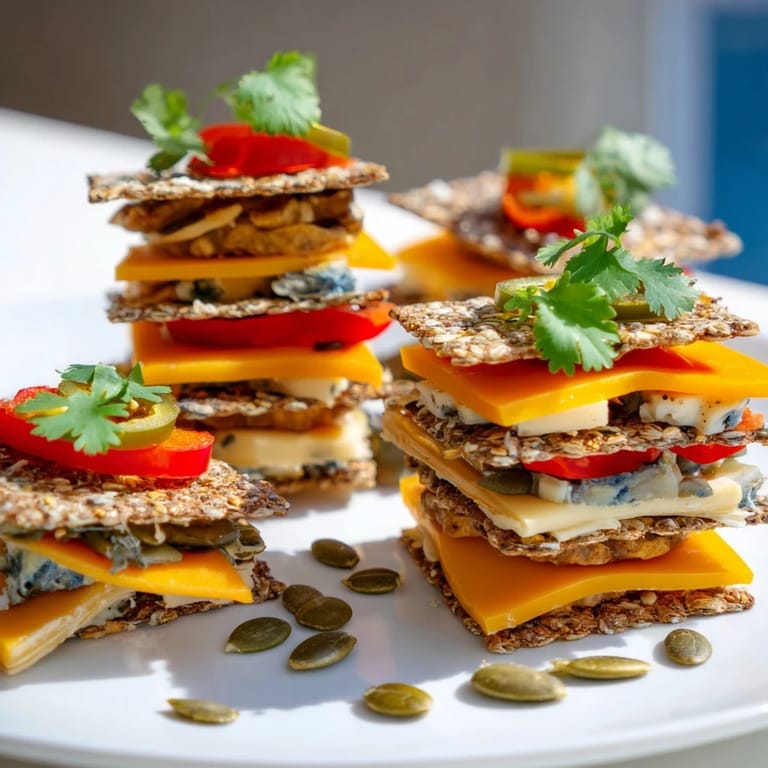
- As you build, slip cilantro leaves and red pepper slices between layers like you're planting vegetation on a mountainside. If you're using blue cheese, place it strategically where its bold blue veining becomes visible—make it a feature, not an accident.
- Crown each peak:
- Top some stacks with a jalapeño slice, a cilantro leaf, or a pepita so each mesa feels like it has its own personality and story.
- Scatter the desert floor:
- Once all your stacks are complete, sprinkle toasted pumpkin seeds around the base of the formation on the platter, creating that dusty, earthy feeling of the Southwest landscape.
- Serve with presence:
- Present immediately while textures are at their crispest, or cover loosely and refrigerate if you need to make them ahead—just know they're best enjoyed within a few hours when the crackers still have their snap.
 Merken
 There's a moment when you step back and look at your platter of mesas, and you realize you've created something that doesn't just taste good—it looks like edible art. That's when you know this appetizer has crossed from clever concept into something genuinely special.
The Art of Stacking
The magic of this dish lives in its construction. Unlike most appetizers that require recipe precision, Southwest Mesa invites play—you're building, not following. Some stacks will be architectural marvels; others will lean slightly and look more authentic. The imperfection is part of the charm. I've learned that the most impressive dishes aren't always the most perfect ones; they're the ones where you can see the hand of the person who made them.
Flavor Layering Secrets
Each layer contributes more than just taste—it's texture, temperature, and visual interest stacked into one bite. The pepper jack brings heat and drama, the Monterey Jack offers mellow comfort, and the smoked gouda whispers sophistication from the background. When you eat a complete stack, you're tasting a story: mild to bold, creamy to sharp, all grounded by the cracker's satisfying crunch. This is why mixing textures and flavors matters more than following a single cheese selection.
Serving and Pairing Ideas
These stacks are at their best when served with something cold and crisp—a Sauvignon Blanc, a dry rosé, or even a light sparkling option. The acidity cuts through the richness of the cheese and keeps your palate fresh for the next bite. This dish works as a casual appetizer for six people or an elegant starter before dinner; scale up by building more stacks rather than stacking higher.
- For a heartier crowd, add thin slices of cured meats or sun-dried tomatoes between the layers before serving.
- If you're feeding vegetarians or someone avoiding gluten, swap in gluten-free crackers without losing any of the visual drama.
- Make these up to four hours ahead, refrigerate loosely covered, and they'll stay fresh and crisp until serving time.
 Merken
 This appetizer reminds me why I love cooking: it's a place where practical skill meets creative impulse, where a conversation with a friend becomes dinner party magic. Build your mesas with confidence, knowing that imperfection is part of their beauty.
Rezept-Fragen & Antworten
- → Welche Käsesorten eignen sich am besten für die Türme?
Eine Mischung aus Cheddar, Pepper Jack, Monterey Jack und geräuchertem Gouda bringt vielfältige Aromen und Texturen in die Schichtung.
- → Wie kann man die Türme am besten stabil stapeln?
Die Käsescheiben sollten etwas kleiner als die Cracker sein, um ein Verrutschen zu verhindern. Variieren Sie die Schichthöhe für Stabilität.
- → Welche Zusätze sorgen für frische und farbliche Akzente?
Dünne Paprikastreifen, frische Korianderblätter und Jalapeños sorgen für Farbe, Frische und optional Schärfe zwischen den Schichten.
- → Wie kann die Vorspeise glutenfrei angeboten werden?
Indem Sie glutenfreie Cracker verwenden, eignen sich die Türme auch für eine glutenfreie Ernährung.
- → Wie lange kann man die Käsetürme vorbereiten?
Die Türme sollten idealerweise kurz vor dem Servieren gestapelt werden, können aber zugedeckt bis zu ein paar Stunden im Kühlschrank bleiben.