 Merken
 There's something almost magical about the moment charred red peppers emerge from the oven, their skins blistered and blackened, releasing that smoky sweetness into your kitchen. My neighbor caught that aroma wafting over the fence one autumn afternoon and asked what I was making, so I invited her in to watch the transformation. Within an hour, what looked like ruined peppers had become the silkiest, most vibrant soup either of us had ever tasted. That day taught me that sometimes the most beautiful dishes begin with a little controlled chaos and patience.
I made this soup the evening my daughter came home with a new vegetarian friend, and I'll admit I was a little nervous about impressing someone with dietary preferences I wasn't used to cooking for. But watching their face light up when they tasted that first spoonful, seeing them ask for seconds, made me realize this soup speaks a language everyone understands. It became our regular Sunday preparation after that, a ritual where she'd help roast the peppers and we'd talk about her week.
Ingredients
- Red bell peppers (4 large): These are the soul of the soup—choose ones that feel heavy and have glossy skin, as they'll have more flesh and less water.
- Yellow onion (1 large, chopped): The sweetness builds as it softens, creating a gentle foundation that lets the peppers shine.
- Garlic cloves (4, unpeeled): Roasting transforms them into something almost buttery and caramelized, so don't skip the peeling step beforehand.
- Carrot (1 medium, peeled and chopped): A subtle sweetness that rounds out the flavor without announcing itself.
- Celery stalk (1, chopped): This adds an aromatic depth that keeps the soup from feeling one-dimensional.
- Vegetable broth (3 cups/720 ml): Use homemade if you have it, but quality store-bought works beautifully too—avoid anything too salty.
- Olive oil (2 tbsp): Split between roasting and sautéing, it carries the flavors forward gently.
- Harissa paste (1–2 tsp): A North African staple that adds warmth and complexity rather than harsh spice.
- Smoked paprika (1 tsp): This is what gives the soup that whisper of something indefinably smoky and cozy.
- Ground cumin (1/2 tsp): Just enough to add earthiness without making the soup taste like it was spiced for something else.
- Salt and freshly ground black pepper: Taste as you go—the roasted peppers are already sweet, so you need less than you'd think.
- Crème fraîche or yogurt (1/4 cup, optional): A cool dollop makes the whole thing feel restaurant-quality, but it's honestly optional.
- Fresh parsley or cilantro, chopped: The brightness here matters—it wakes up everything you've built.
Tired of Takeout? 🥡
Get 10 meals you can make faster than delivery arrives. Seriously.
One email. No spam. Unsubscribe anytime.
Instructions
- Char the peppers and garlic:
- Heat your oven to 425°F (220°C) and arrange the whole peppers and unpeeled garlic cloves on a baking sheet. Drizzle with a tablespoon of olive oil and roast for 25–30 minutes, turning the peppers halfway through, until their skin is blackened and blistered all over and the garlic feels tender when pressed. Don't worry about those dark spots—that's where the flavor lives.
- Steam and peel:
- Transfer the roasted peppers to a bowl, cover it with a plate or plastic wrap, and let them sit for 10 minutes while the steam loosens their skins. This step is non-negotiable; it makes peeling almost effortless and keeps you from burning your fingers. Once cool enough to handle, peel away the charred skin and remove the seeds—it's oddly satisfying, like solving a puzzle.
- Build the base:
- Pour the remaining tablespoon of oil into a large pot over medium heat and add your chopped onion, carrot, and celery. Stir occasionally for 5–7 minutes until everything is soft and the kitchen smells like a warm vegetable garden.
- Bring the roasted ingredients together:
- Add your peeled peppers, squeezed roasted garlic, smoked paprika, cumin, and harissa paste to the pot. Stir for about a minute until the spices bloom and the aroma becomes almost intoxicating—this is the moment you know something good is happening.
- Simmer gently:
- Pour in the vegetable broth, bring everything to a boil, then lower the heat and let it simmer quietly for 10 minutes. This allows the flavors to marry without the peppers losing their vibrant color.
- Blend until silky:
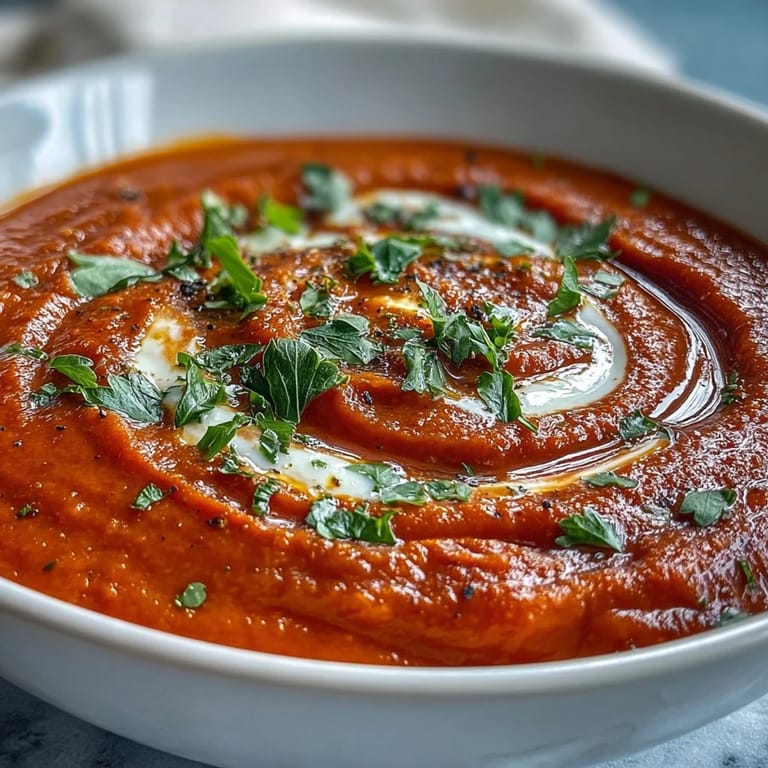
- Use an immersion blender to puree the soup directly in the pot, or carefully transfer it in batches to a countertop blender until you have something smooth as silk. The texture matters here—rough or chunky changes the whole experience.
- Taste and finish:
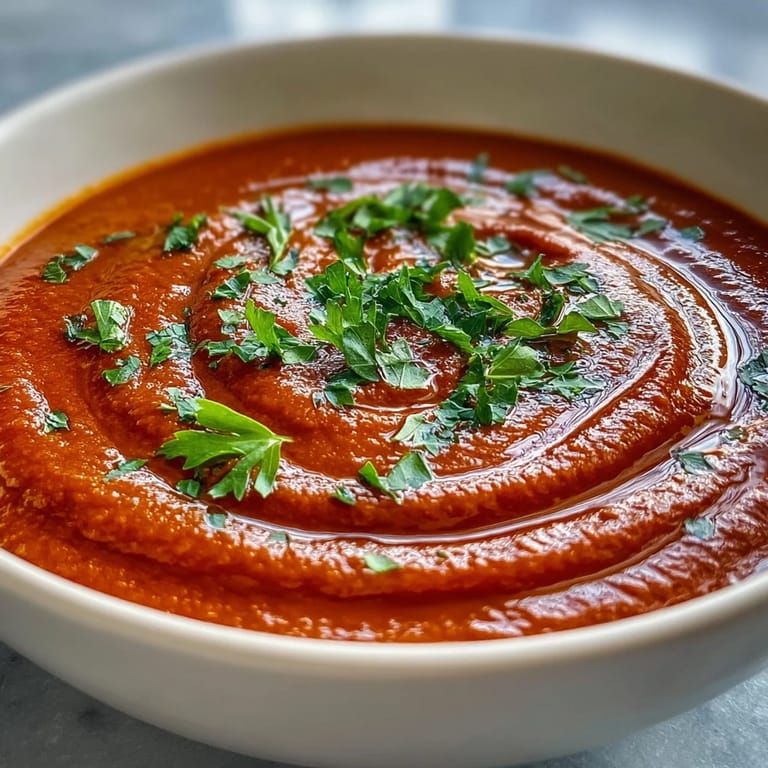
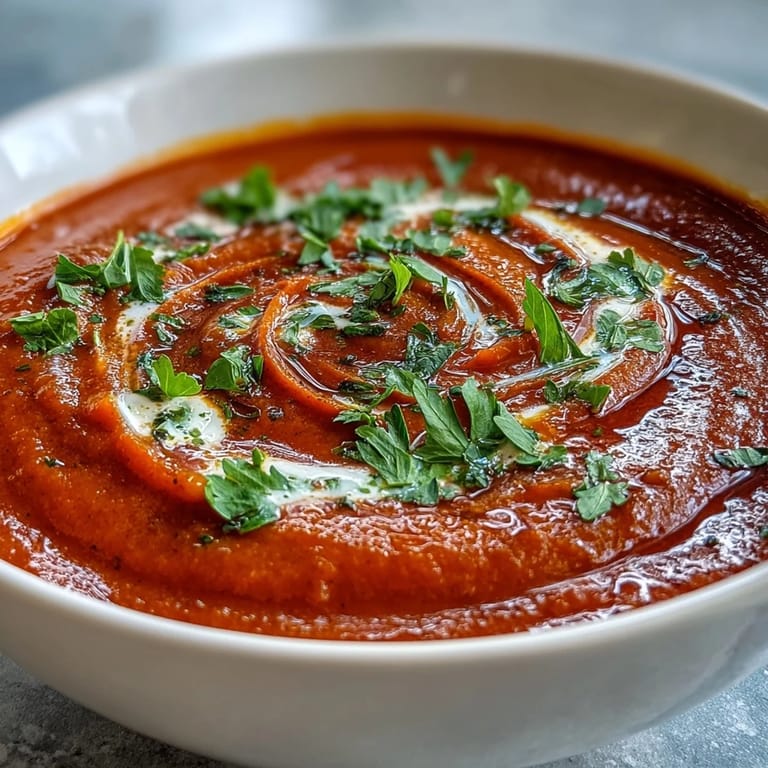
- Season with salt and pepper, tasting as you adjust. Pour into bowls and top with a spoonful of crème fraîche or yogurt and a handful of fresh herbs.
 Merken
 Years ago, I made this soup the day my mother was moving into a new house, and I brought a batch over to her empty kitchen where we ate it straight from the pot, sitting on the floor surrounded by boxes. We didn't talk much that day, but somehow the warmth of that bowl said everything. It's become a soup I make whenever someone needs comfort without fuss, because it handles the emotional weight of a meal without ever trying too hard.
The Roasting Magic
Roasting peppers isn't difficult, but it does require a shift in perspective. Most of us are used to thinking of char as a mistake, but here it's the entire point—those blackened areas develop caramelized sugars and smoky depth that no fresh pepper can match. The first time I intentionally burned something in the kitchen on purpose, I was nervous, but that soup proved to me that sometimes the path to something beautiful looks like destruction halfway through. Once you understand that principle, you start seeing it everywhere in cooking.
When to Adjust the Heat
Harissa is a seasoning that invites conversation rather than demands it. Some people taste it and immediately want more, while others prefer the peppers to speak for themselves with just a whisper of warmth underneath. There's no wrong answer, which is actually quite liberating—you're not following a food rule so much as tuning an instrument to match your own preferences. I've learned that adding spice is always possible, but you can't remove it once it's in the pot, so starting timidly is the kindest choice.
The Texture and Your Blender
The difference between a chunky soup and a silky one comes down to blending time and patience. An immersion blender works beautifully if you're willing to go slowly and move it around the entire pot—rushing leads to the bits hiding in corners. If you're using a countertop blender, work in batches and be careful with the heat; I once filled a blender with hot soup only to have the lid pop off spectacularly. These days I place a kitchen towel on top as insurance against my own impatience.
- Let your blender do the work instead of forcing it—smooth comes with time, not force.
- If your soup seems too thick, add broth a splash at a time until it reaches the consistency you want.
- Taste one final time before serving because salt behavior changes slightly after blending.
 Merken
 This soup has become one of those recipes that works for almost every occasion because it's both comforting and elegant, simple and sophisticated. Make it once and you'll understand why it's worth repeating.
Rezept-Fragen & Antworten
- → Kann ich die Suppe ohne Harissa zubereiten?
Ja, Sie können die Harissa weglassen oder durch eine mildere Chilipaste ersetzen, um die Schärfe anzupassen.
- → Wie lange hält sich die Suppe im Kühlschrank?
Die Suppe bleibt bis zu drei Tage im Kühlschrank frisch und lässt sich hervorragend vorbereiten.
- → Ist diese Suppe einfrierbar?
Ja, die pürierte Suppe lässt sich hervorragend einfrieren und bis zu drei Monate lagern.
- → Welche Alternativen gibt es zu Crème fraîche?
Griechischer Joghurt, Schmand oder pflanzliche Alternativen wie Kokosjoghurt funktionieren ebenfalls als Garnitur.
- → Kann ich andere Paprikasorten verwenden?
Orange oder gelbe Paprika eignen sich ebenfalls, wobei rote Paprika die süßeste Note bringen.
- → Wie erreiche ich eine besonders rauchige Note?
Verwenden Sie am Grill geröstete Paprika oder fügen Sie eine Prise Chiliflocken hinzu.