 Merken
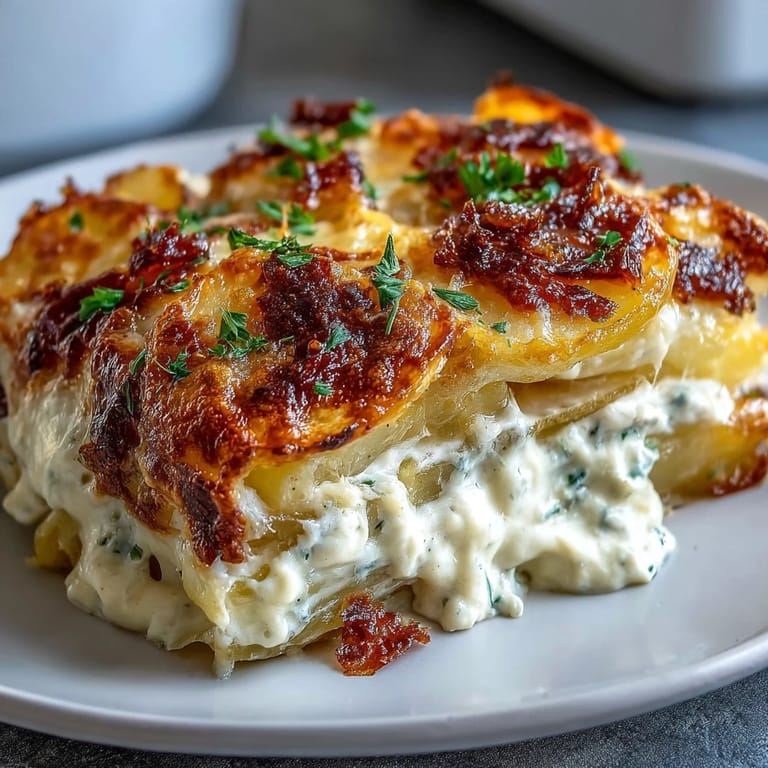
 My neighbor brought this to a holiday potluck years ago, and I watched people come back for thirds—something I'd rarely seen happen with a side dish. The golden crust caught the light perfectly, and when you broke through it with your fork, the cream inside was still steaming and luxuriously thick. I asked for the recipe that night, thinking it would be complicated, but discovered it was mostly about patience and good cheese. Now whenever I make it, the kitchen fills with this buttery, garlicky warmth that makes everyone pause mid-conversation.
I made this the first time I was cooking for my partner's family dinner, and I remember standing in front of the oven at the forty-minute mark, pulling back the foil to peek at the potatoes underneath. Steam hit my face, and that's when I realized the cream had thickened perfectly—it was the small confirmation I needed that I hadn't messed it up. The dish came out golden and bubbling, and his mother asked if I'd made it before, which felt like the highest compliment.
Ingredients
- Yukon Gold or Russet potatoes (2 lbs / 900 g), peeled and thinly sliced: Yukon Golds hold their shape better and have a naturally buttery taste, but Russets work too if you're gentle when stirring; slice them about 1/8 inch thick so they cook evenly in the cream.
- Heavy cream (2 cups / 480 ml): This is where the richness lives, so don't skip it or substitute with light cream; full fat makes the difference between creamy and disappointing.
- Whole milk (1 cup / 240 ml): The milk balances the heavy cream so the sauce isn't overwhelmingly rich and helps it distribute evenly among the potato layers.
- Garlic cloves (2), minced: Fresh garlic gives the sauce a subtle warmth; avoid using garlic powder, which tastes flat by comparison.
- Salt (1/2 teaspoon) and freshly ground black pepper (1/4 teaspoon): Season the cream sauce itself, not just at the end, so every layer tastes intentional.
- Grated nutmeg (1/4 teaspoon): Just a whisper of nutmeg elevates this from good to memorable; measure carefully because it can overpower quickly.
- Gruyère cheese (1 1/2 cups / 150 g), grated: Gruyère melts smoothly and has a subtle nuttiness that defines au gratin; grate it fresh if you can because pre-shredded cheese has anti-caking agents that can make the texture grainy.
- Parmesan cheese (1/2 cup / 50 g), grated: Parmesan adds sharpness and helps the top brown beautifully; again, freshly grated is worth the extra minute.
- Fresh chives or parsley (2 tablespoons), chopped: The garnish is optional but adds a bright note that cuts through the richness and makes the dish feel finished.
Tired of Takeout? 🥡
Get 10 meals you can make faster than delivery arrives. Seriously.
One email. No spam. Unsubscribe anytime.
Instructions
- Prepare your canvas:
- Preheat the oven to 375°F (190°C) and butter your 9x13-inch baking dish generously, getting into the corners. If you want, rub a cut garlic clove inside the dish first—it imparts a subtle flavor that lifts the whole dish.
- Build the cream base:
- Combine the heavy cream, milk, minced garlic, salt, pepper, and nutmeg in a saucepan over medium-low heat, stirring occasionally until it just starts to steam (you'll see a few wisps rising). Remove it from heat immediately—you're not making soup, just infusing the flavors together.
- Layer the first foundation:
- Spread half your sliced potatoes in an even layer across the buttered dish, slightly overlapping them like roof shingles. This first layer sets the texture for the whole dish, so take a moment to arrange them neatly.
- Add the first cheese layer:
- Sprinkle half the Gruyère and half the Parmesan evenly over the potatoes, making sure to distribute it so some cheese reaches every potato slice. The cheese will melt down and create pockets of flavor throughout.
- Build the top layer:
- Arrange the remaining potato slices on top of the cheese, again overlapping them gently. Pour the warm cream mixture slowly and evenly over all the potatoes—the cream should come about three-quarters of the way up the dish.
- Crown with cheese:
- Top with the remaining Gruyère and Parmesan, spreading it so you get an even golden crust. The cheese on top will brown and become crispy while the cheese mixed into the cream melts silently underneath.
- The covered bake:
- Cover the dish loosely with foil (you want steam to circulate, not trap moisture) and bake for 40 minutes. The foil keeps the top from browning too fast while the potatoes underneath become tender.
- The final reveal:
- Remove the foil and bake another 20 to 25 minutes, until the top turns deep golden brown and you can pierce a potato easily with a knife. The edges will bubble slightly around the sides, which is exactly what you want to see.
- The hardest part—waiting:
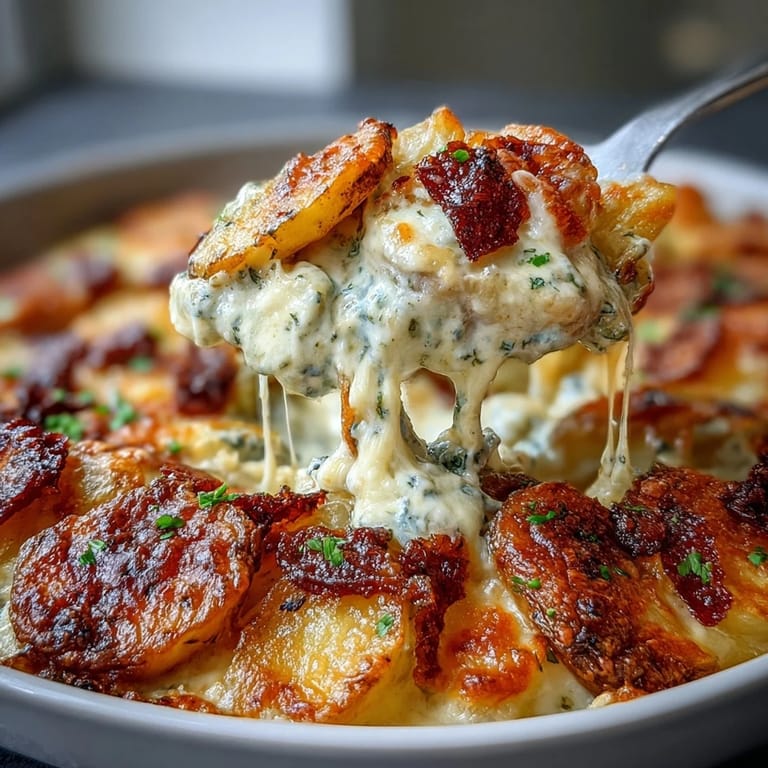
- Let the gratin rest for 10 minutes before serving so the cream thickens slightly and the layers hold together when you spoon it out. This resting time is when the magic happens, even though your instinct will be to dig in immediately.
 Merken
 There's something about watching someone you care about enjoy food you made that shifts your whole perspective on cooking. I served this gratin at a small dinner once, and my grandmother—who's seen countless dishes come and go—took a second helping and simply said, 'This is elegant.' That single word stuck with me more than any rave review ever could.
Why This Dish Works Every Time
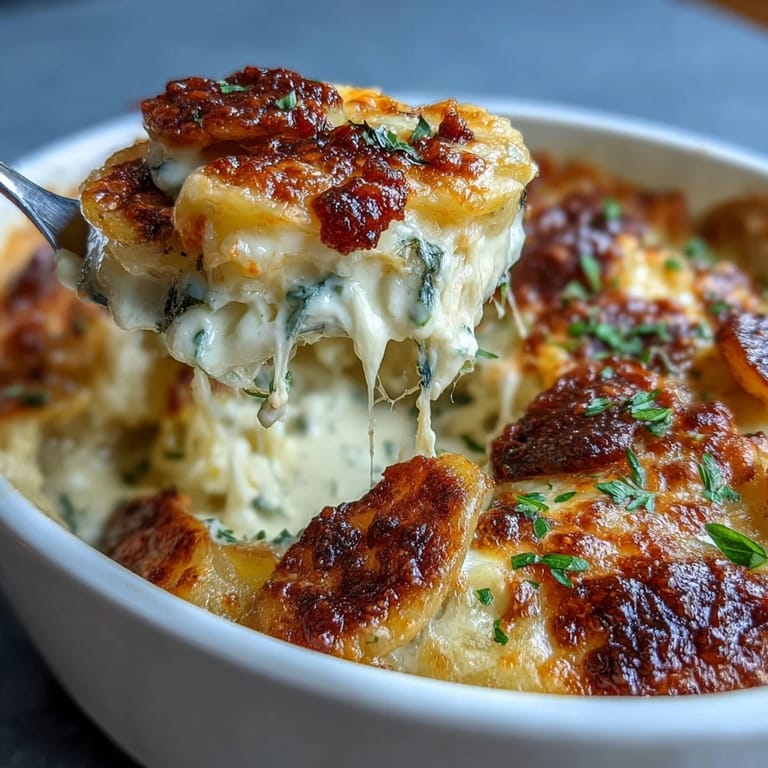
Au gratin potatoes succeed because they're built on a simple principle: tender potatoes, rich cream, melted cheese, and time. There's no complex technique to master, just layers of good ingredients that transform together in the oven. The cream acts as an insulator, keeping the potatoes moist and tender, while the cheese on top becomes your textural contrast. I've made this dozens of times now, and the worst version is still good—it's genuinely hard to mess up once you understand the structure.
Pairing Ideas Beyond Ham
While this gratin is famously paired with baked or glazed ham, it's flexible enough to shine alongside roasted chicken, lamb chops, or even a rich fish like salmon. The creamy richness balances salty, smoky, or herb-forward main dishes beautifully. I've served it alongside vegetarian main courses too—a gratin this satisfying can stand alongside mushroom Wellington or a creamy vegetable stew without feeling out of place.
Making It Your Own
The base recipe is strong enough to accommodate variations without losing its soul, and that's when cooking becomes play instead of instruction-following. I've added caramelized onions between layers for sweetness, or a pinch of thyme when I'm feeling earthy. One friend swears by adding crispy bacon, while another uses sharp white cheddar instead of Gruyère for a tangier profile. The beauty is that once you understand how it works, you can adapt it to what you love.
- Sweet onions sliced thin add a subtle sweetness that plays beautifully against the savory cream and cheese.
- A tiny pinch of cayenne pepper in the cream sauce adds warmth without heat if you're craving complexity.
- Don't skip the final resting period—it lets the dish set just enough so it slices cleanly and looks beautiful on the plate.
 Merken
 This gratin has been my answer to 'what should I bring' for years now, and it's never let me down. Make it once, and you'll understand why it's considered a classic.
Rezept-Fragen & Antworten
- → Welche Kartoffelsorten eignen sich am besten?
Festkochende Sorten wie Yukon Gold oder Russet sind ideal, da sie beim Backen ihre Form behalten und eine cremige Textur entwickeln.
- → Wie vermeide ich zu flüssige Sauce?
Die Sahne leicht erhitzen und gut mit den Gewürzen vermischen, dann gleichmäßig über die Kartoffeln gießen. Das Backen ohne Deckel in den letzten Minuten hilft, die Oberfläche zu verdicken.
- → Kann ich den Käse austauschen?
Gruyère kann durch scharfen Cheddar ersetzt werden, um eine andere Geschmacksnote zu erzielen, ohne die Textur zu beeinträchtigen.
- → Wie lange sollten die Kartoffeln ruhen nach dem Backen?
Eine Ruhezeit von etwa 10 Minuten ist empfehlenswert, damit sich die Säfte setzen und die Schichten besser schneiden lassen.
- → Welche Kräuter passen gut als Garnitur?
Frischer Schnittlauch oder Petersilie ergänzen das Gericht mit einem frischen Aroma und sorgen für ansprechende Farbtupfer.